The brief
As a result of an increase in mobile devices with eSIM capability. EE must provide the capability for customers to be able to:
Order a new eSIM
Change from a physical SIM to an eSIM.
eSIM
EE was the first telecoms company in the UK to introduce eSIM to their customers. I was fortunate to lead the design on the delivery of this experience.
I worked in a team consisting of:
Product owner
Content designer
User researcher
Solution designer/Business analyst
Development team.
Early insight
eSIM was new when this project started
Wanted to understand what the awareness was so that this could help shape the direction of the project.
Briefed the user researcher explaining what I would like to get out of the research. They suggested at this stage to conduct a survey.
This was done by our partner agency spotless.
User flow mapping
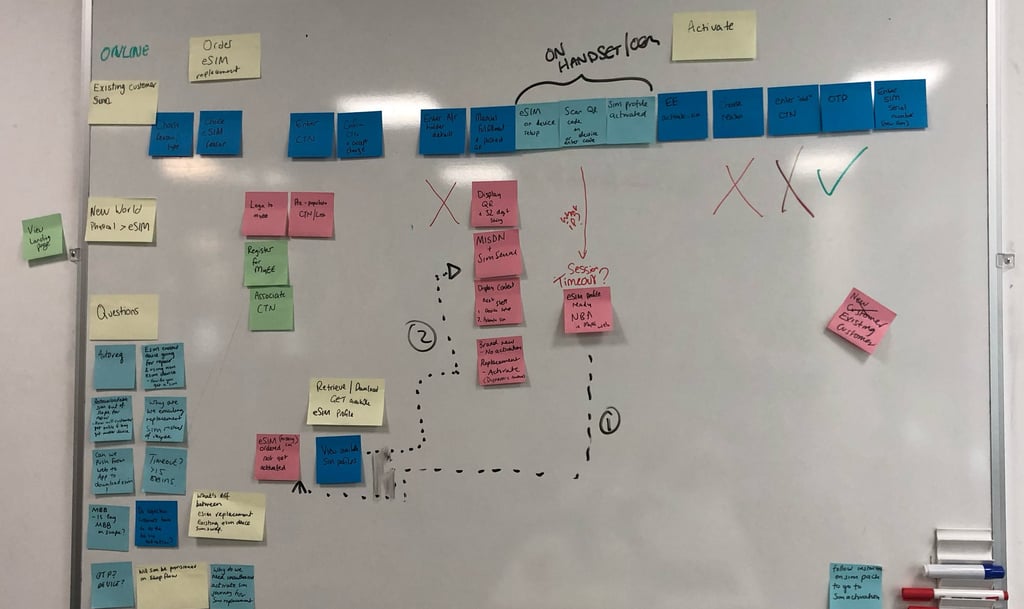
Working with the PO and Solution designer the existing sim ordering process was mapped out.
Helped us analyse if the existing flow could be amended or if a new flow was required.
Our findings were shared with the development team to get an early overview of the possible solution and assess feasibility.
Below is an image of the flow.
Challenge from technology
The technology team were assessing a solution and a requirement from them was that users should be able to copy/paste or manually enter a 32 alphanumeric characters.
I challenged this requirement as we were designing for users with a broad range of technical abilities. The technology team wanted to move ahead with their solution as it was developed.
Prototype and usability testing
I wanted to validate if the proposed solution would be usable by our customers.
I contacted the usability researcher and briefed them to plan some usability testing to validate whether the propose solution would work.
Using the journey that we mapped I created a prototype.
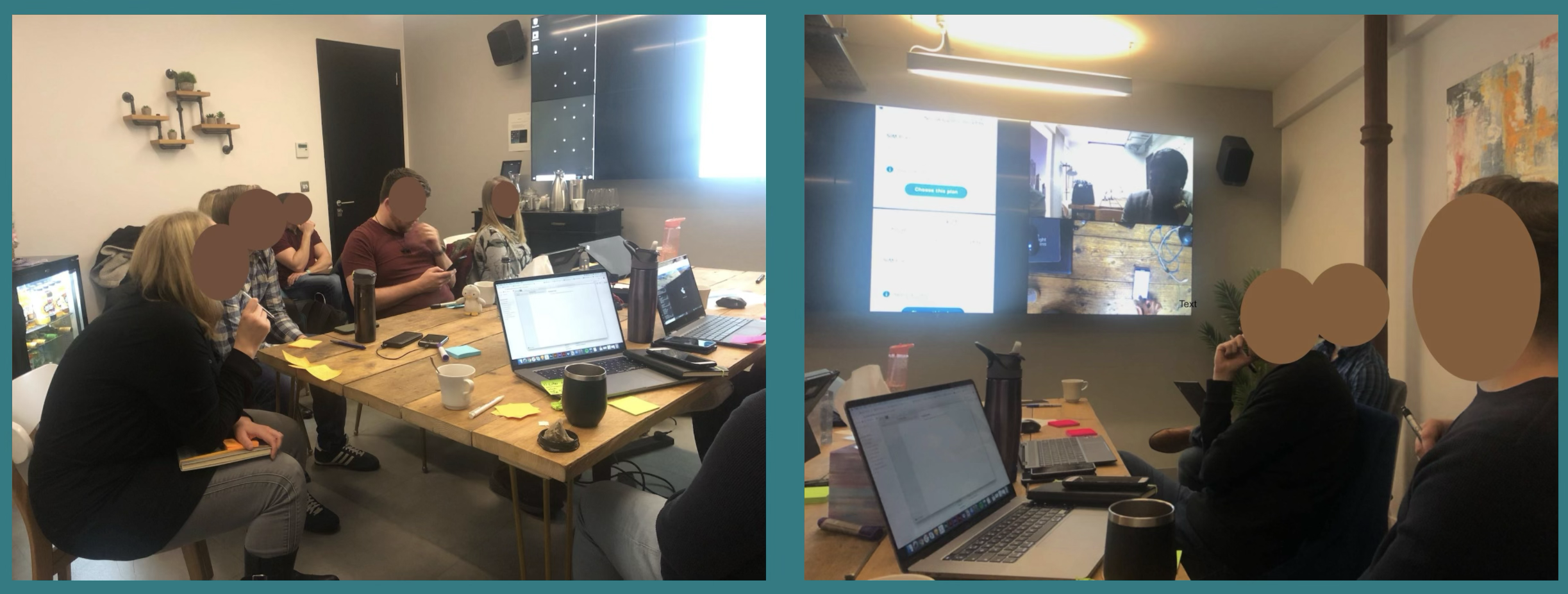
The prototype was tested with 6 users and the technology team was invited to observe the usability testing session.
By the 3rd participant it was obvious that the solution did not work and the technology team were happy to scrap the idea and investigate an alternative.
The alternative solution was incorporated into the prototype and tested. Feedback was positive there were some minor improvements needed and these were added to the final designs.
Below is an image of the Usability testing session.
Outcome
It was great to transform this project from being a technology led to a user centred design project.
Working with and managing stakeholders expectations was a key contributor to the success.
In the first week that this journey went live we saw an 80% success rate in users being able to successfully download or order an eSIM profile.
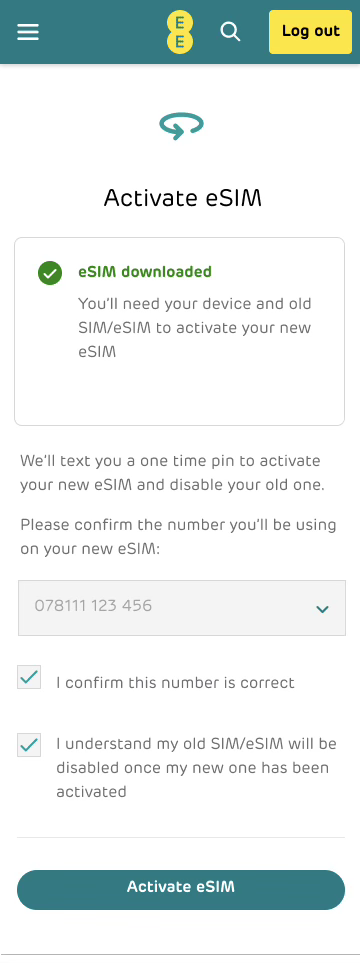
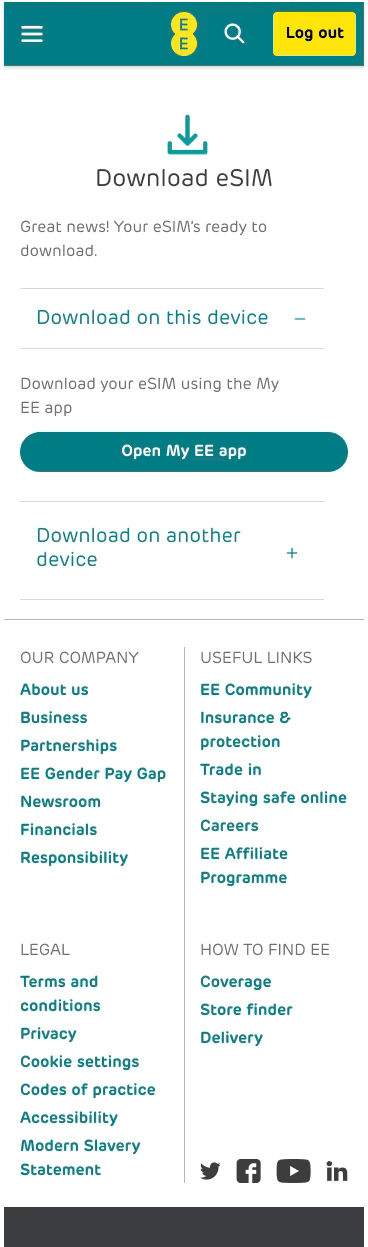
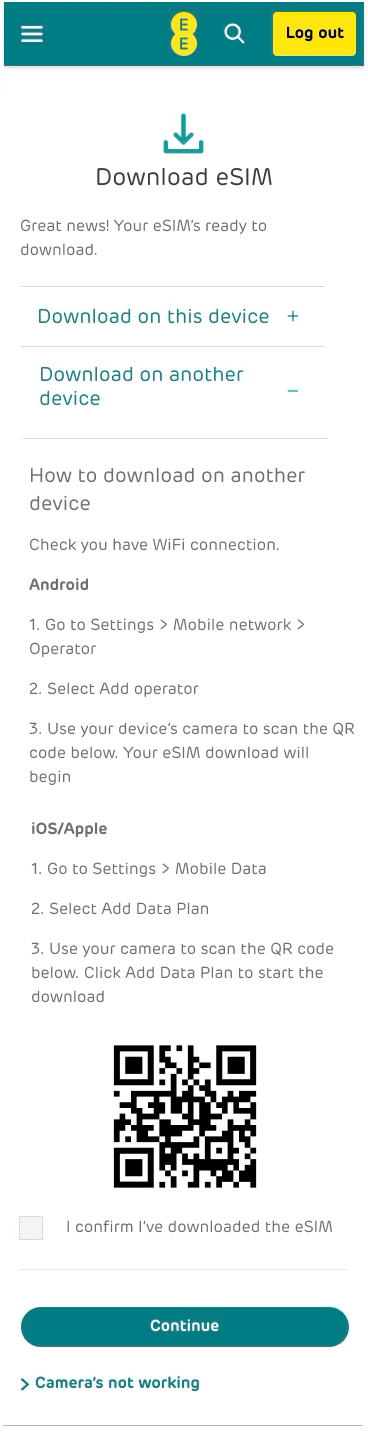
Below is a selection of the screens designed.